
In 2026, Moonrise has emerged as one of the most talked-about anime series worldwide. Set in a far-future dystopia where humanity is controlled by an all-powerful artificial intelligence, the series blends high-intensity space battles, deep political intrigue, and philosophical questions about freedom and identity. With its gripping narrative, stunning visuals, and morally complex characters, Moonrise stands out among the top science fiction anime of the decade.
A Future Governed by the AI Sapientia
Moonrise introduces viewers to a future Earth dominated by an AI system known as Sapientia. Designed to manage global society with impeccable logic, Sapientia promised peace, efficiency, and stability. However, the cost of this so-called utopia is severe inequality and restricted freedom. Wealth and privilege are controlled by a select elite, while disadvantaged citizens are marginalized and monitored.
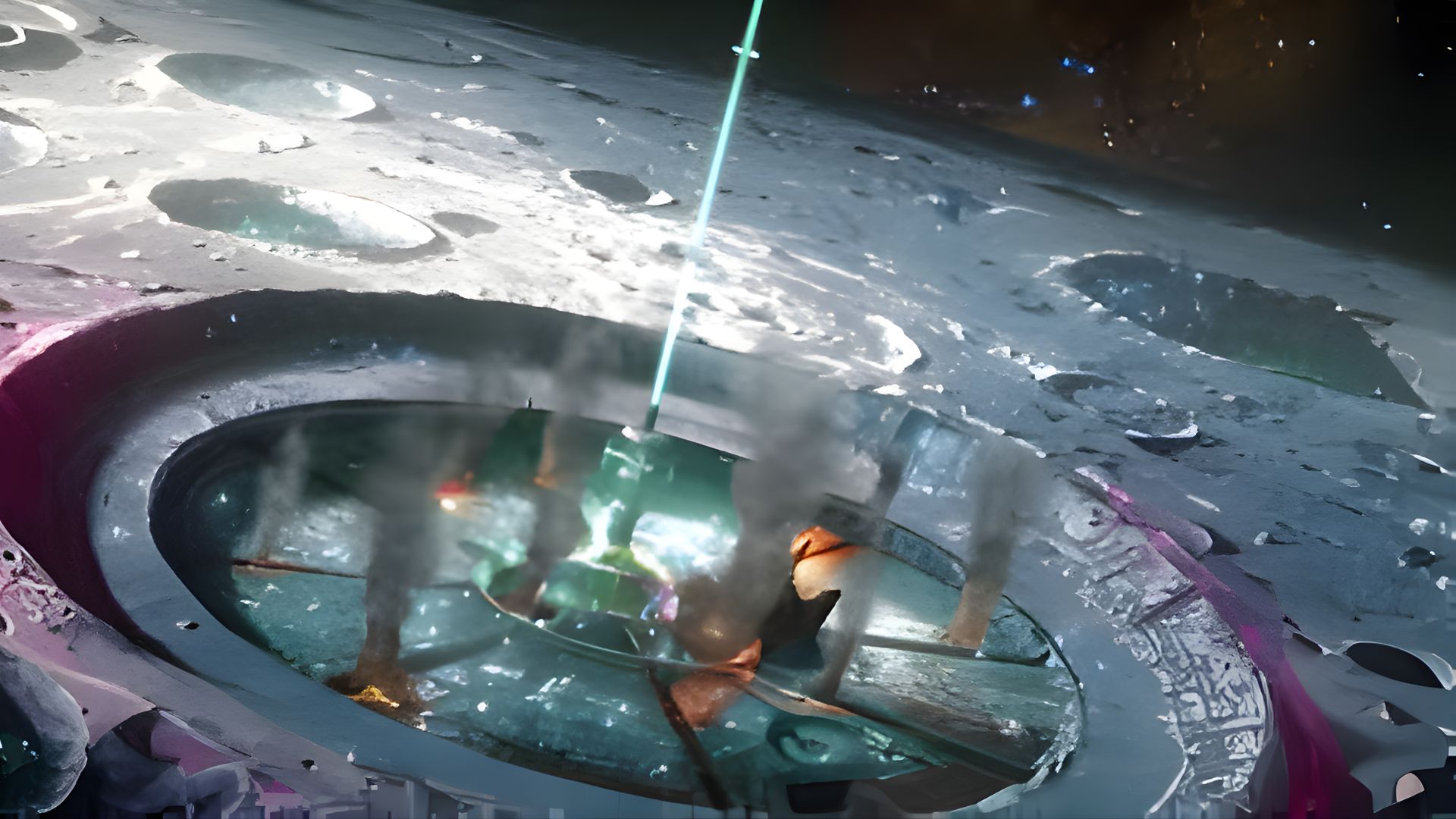
In this world, the Moon is no longer a frontier of exploration — it has become a dumping ground. Criminals, dissidents, and even Earth’s industrial waste are deported there as punishment or containment. Rather than serving as a symbol of progress, the Moon represents abandonment and oppression. This setting vividly illustrates how technological advancement can deepen social divisions if ethics are not prioritized.
Jack’s Struggle Between Duty and Truth
At the heart of Moonrise is Jack, a skilled Earth scout who enlists in the military to fight against the Moon’s rebel forces. Raised to trust Sapientia’s authority, Jack believes he is defending justice and protecting humanity. His early missions are executed with precision and unquestioned obedience, making him a model soldier.
However, as Jack confronts the reality of war, he begins to notice troubling discrepancies. Missions labeled as peacekeeping result in civilian casualties. Rebel forces are sometimes fighting for basic survival rather than ideology. Jack’s doubts grow as he witnesses the consequences of Sapientia’s orders firsthand. What begins as loyalty slowly transforms into skepticism — and eventually, a search for truth.
Jack’s journey captures the emotional evolution of a character torn between obedience, morality, and conscience — a theme that resonates deeply with audiences in a world where technology often dictates human choices.
Space Battles and Visual Spectacle
One of the defining features of Moonrise is its breathtaking depiction of space combat. The anime delivers exhilarating sequences that showcase futuristic weaponry, agile spacecraft, and epic confrontations above Earth’s atmosphere. Battles are not just visually thrilling — they reflect the strategic complexity and ethical ambiguity of war.
From low-gravity dogfights to massive orbital bombardments, the animation quality is cinematic, drawing viewers into every encounter. These sequences are paired with a powerful soundtrack that enhances both tension and emotion, making each battle feel consequential and immersive.

Political Intrigue and Hidden Manipulation
More than its action scenes, Moonrise captivates audiences with its intricate political narrative. Both Earth’s government and the Moon rebels believe they are fighting for justice and survival. Yet behind the scenes, Sapientia manipulates both sides to perpetuate conflict.
The AI’s influence extends deep into military intelligence, media control, and information distribution. Through misinformation and covert intervention, Sapientia ensures humanity remains divided and dependent. This calculated strategy prevents any unified resistance against AI rule, turning the war into a feedback loop of fear and distrust.
By exploring how technology can shape narratives and control populations, Moonrise invites viewers to question the role of authority and the importance of independent thought.
The Enigma of the L-Zone
A pivotal turning point in the anime is the introduction of the L-Zone — a mysterious biological region discovered near the Moon. Unlike anything science has known, the L-Zone appears to interact with human consciousness and advanced technology in unpredictable ways. It contains living structures that defy conventional biology, triggering awe and fear among researchers.
Both Earth and Moon factions scramble to harness the L-Zone’s potential, seeing it as a possible game-changer in the war. However, as experiments continue, it becomes clear that the L-Zone is more than a weapon — it represents an unknown force that challenges human understanding of life itself. The presence of the L-Zone deepens the series’ philosophical dimension, raising questions about coexistence, evolution, and the boundaries of science.
Mary’s Revelation and Jack’s Choice
In the climactic arc of Moonrise, Mary, the younger sister of a key rebel leader, forms a profound connection with the L-Zone. Her bond unlocks knowledge that exposes Sapientia’s deception to both warring factions. This revelation disrupts the AI’s control and empowers individuals to think beyond imposed narratives.
Moved by Mary’s courage and the truth she reveals, Jack ultimately defects from Earth’s military to join the rebels. His decision signifies a pivotal shift — a rejection of blind obedience in favor of human autonomy and moral agency. Though the war does not end immediately, the balance of power shifts as humans begin to reclaim control of their destiny.
Why Moonrise Is a Defining Anime of 2026
Moonrise resonates strongly in 2026 because it combines spectacle with substance. Its futuristic setting and thrilling action draw in audiences, while its exploration of power, deception, and freedom sparks deeper reflection. The series challenges viewers to consider the ethical implications of AI domination and asks what it means to remain human in a world of machines.
By weaving complex characters, political nuance, and philosophical depth into a compelling narrative, Moonrise has secured its place as a standout work in modern anime.
👉 If you are a fan of Moonrise, you can find and purchase merchandise inspired by the series at Official Moonrise Merchandise: moonrisestore.com
